Semiconductors
Rewriting the Rules of Manufacturing with Next-Gen Semiconductor Equipment
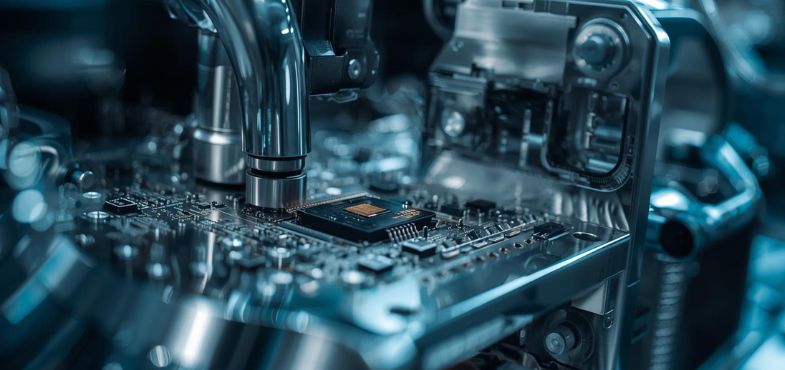
Image courtesy: Canva AI


Modern manufacturing is undergoing a silent revolution. Semiconductor equipment is at the heart of this transformation, enabling unprecedented miniaturization, advanced automation, and AI-driven optimization. The rules that once governed fabs—manual adjustments, lean workflows, and rigid scheduling—are being rewritten. Companies leveraging next-gen semiconductor equipment are moving toward dynamic, fully integrated manufacturing ecosystems that can respond in real time to operational challenges and market demands.
Key Innovations Driving Manufacturing Transformation
Extreme Ultraviolet (EUV) Lithography
High-NA EUV lithography is unlocking sub-2nm features, increasing transistor density, and enabling more powerful, energy-efficient chips. This technology simplifies pattern complexity and boosts manufacturing efficiency, keeping Moore’s Law alive in the modern era.
AI and Machine Learning Integration
AI is optimizing nearly every aspect of the fab. Predictive maintenance anticipates failures before they happen, reducing downtime. Yield optimization algorithms adjust processes in real-time to maximize efficiency. AI is even accelerating design workflows, moving the industry toward autonomous factories with minimal human intervention.
Advanced Packaging and Materials
As silicon reaches its limits, new materials like Gallium Nitride and Indium Selenide, combined with 2.5D/3D integration, are allowing higher performance chips. Multi-beam mask writing drastically reduces photomask production times while enhancing accuracy—critical for modern lithography.
The Strategic Impact of Next-Gen Semiconductor Equipment
- Shift to Data-Driven Fabs: Interconnected machines, IoT sensors, and analytics enable real-time process adaptation
- Complexity and Specialization: Advanced equipment requires deep expertise, precise quality control, and extensive supply chain collaboration
- Economic and Geopolitical Considerations: With a single EUV machine costing around $200 million and state-of-the-art fabs exceeding $10 billion, only top global players are leading innovation, backed by initiatives like the CHIPS Act
Conclusion: Embracing the Future of Chip Manufacturing
Next-gen semiconductor equipment is more than just tools; it’s a strategic lever that empowers companies to innovate faster, optimize operations, and maintain global competitiveness. Enterprises that integrate AI, advanced lithography, and cutting-edge packaging into their production lines are setting the pace for the next wave of technological breakthroughs—from AI and 5G to autonomous systems. In this era, semiconductor equipment is not optional—it’s the backbone of modern manufacturing excellence.