Telecommunications Industry
Why Modern Data Centers Depend on Enterprise Fiber Optic Networking

Image Courtesy: Unsplash


Modern data centers are experiencing rapid transformation as organizations embrace artificial intelligence, cloud computing, edge environments, and increasingly data-intensive applications. These technologies are generating massive volumes of traffic that traditional networking infrastructure often struggles to support efficiently.
As enterprises demand faster processing, lower latency, and greater scalability, network performance has become a critical factor in overall data center success. This is why enterprise fiber optic networking has emerged as a foundational component of modern data center architecture.
Far beyond simply providing higher bandwidth, fiber-optic infrastructure enables the speed, reliability, and scalability required to support next-generation digital operations.
Also Read: Why Growing Companies Are Switching to Business Fiber Optic Internet
The Growing Need for High Bandwidth Connectivity
Today’s data centers must support workloads that consume significantly more bandwidth than traditional business applications. AI training models, real-time analytics, video processing, cloud services, and Internet of Things environments all require rapid data movement across networks.
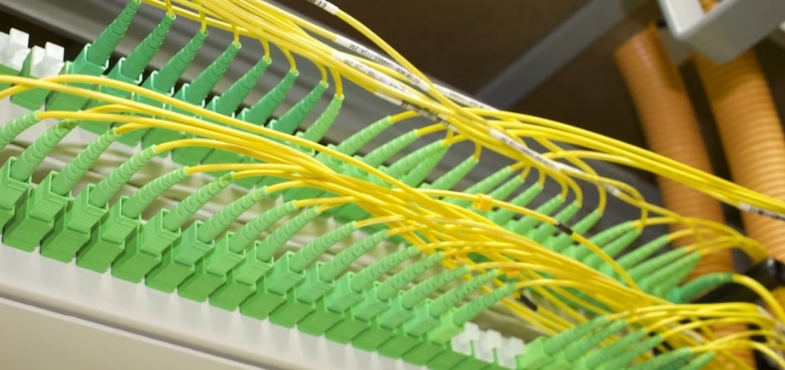
Enterprise fiber optic networking provides the capacity needed to handle these demands without creating performance bottlenecks. Unlike conventional copper cabling, fiber optic technology transmits data using light signals, enabling significantly higher data transfer rates over longer distances.
This capability allows organizations to scale infrastructure while maintaining consistent network performance across increasingly complex environments.
Supporting AI and Data Intensive Workloads
Artificial intelligence is changing the requirements of data center networking. AI workloads often involve continuous movement of large datasets between storage systems, servers, graphics processing units, and cloud platforms.
Any delay in data transmission can negatively impact processing efficiency and increase operational costs.
Enterprise fiber optic networking provides the low latency and high throughput needed to support these demanding workloads. Faster data movement enables AI systems to process information more efficiently, improving application performance and accelerating innovation initiatives.
As AI adoption continues to grow, fiber optic infrastructure is becoming an essential requirement rather than an optional upgrade.
Enhancing Reliability and Operational Resilience
Data center downtime can have significant financial and operational consequences. Network infrastructure must therefore deliver consistent performance while minimizing disruptions.
Fiber optic networking offers several advantages in this area. Fiber cables are resistant to electromagnetic interference, which can affect traditional copper-based connections. They also support stable performance across longer distances without signal degradation.
This reliability helps organizations maintain business continuity and ensure uninterrupted access to critical applications and services. For enterprises operating in highly connected environments, dependable network performance is a key competitive advantage.
Enabling Scalable Data Center Growth
Data center capacity requirements continue to expand as organizations generate and process larger amounts of information. Infrastructure investments made today must be capable of supporting future growth without requiring extensive redesign.
Enterprise fiber optic networking provides a highly scalable foundation that can accommodate increasing bandwidth demands. Organizations can upgrade network speeds while leveraging existing fiber infrastructure, reducing the need for disruptive and costly overhauls.
This scalability allows data center operators to adapt to evolving business requirements while protecting long-term technology investments.
Supporting Cloud and Hybrid Infrastructure Strategies
Many organizations now operate across a combination of on-premises, cloud, and edge environments. These distributed architectures require seamless connectivity between multiple locations and platforms.
Fiber optic networking plays a critical role in enabling high-speed communication across these environments. By supporting efficient data exchange between data centers, cloud providers, and remote facilities, fiber infrastructure helps organizations maintain visibility, performance, and operational flexibility.
As hybrid and multicloud strategies become more common, the importance of robust network connectivity continues to increase.
Also Read: How VoIP Internet Phone Systems Reduce Costs and Boost Productivity
Conclusion
Modern data centers are no longer defined solely by computing and storage capabilities. Network infrastructure has become a strategic enabler of performance, scalability, and business resilience. Enterprise fiber optic networking provides the bandwidth, reliability, and flexibility required to support emerging technologies such as AI, cloud computing, real-time analytics, and edge applications.
As digital transformation accelerates and data demands continue to rise, organizations that invest in enterprise fiber optic networking will be better positioned to build efficient, future-ready data centers capable of supporting long-term growth and innovation.