Telecommunications Industry
How Telecom Threat Management Prevents Telecom Fraud

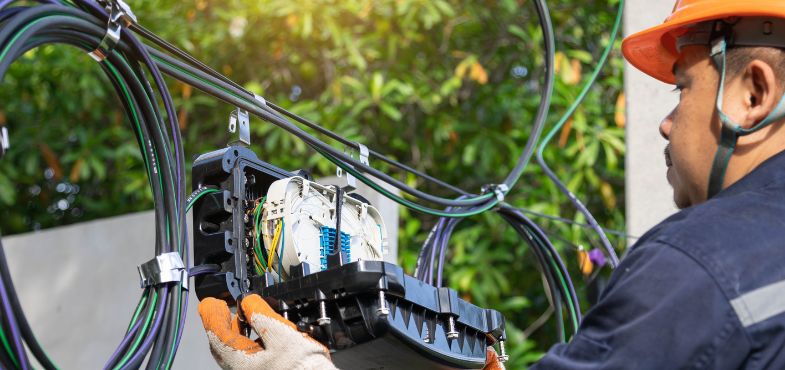
Image Courtesy: Pexels


Telecom fraud remains one of the most persistent challenges facing service providers today. From SIM box fraud and account takeovers to international revenue-sharing schemes, fraudulent activities can result in significant financial losses and damaged customer trust. Traditional rule-based security approaches often struggle to keep pace with rapidly evolving threats. This is where telecom threat management plays a critical role. By combining artificial intelligence, real-time analytics, and automated response mechanisms, telecom operators can detect suspicious activity earlier and stop fraud before it impacts business operations.
Detect Fraud Faster with Real-Time Intelligence
Modern telecom networks generate massive volumes of call records, signaling data, and customer activity logs every day. Telecom threat management transforms this data into actionable intelligence that helps operators identify fraud in real time.
Key capabilities include:
- Continuous monitoring of call detail records (CDRs) and network events.
- Real-time detection of unusual calling patterns and traffic anomalies.
- Automated risk scoring to identify high-risk activities instantly.
- Dynamic blocking of suspicious calls, messages, and network transactions.
By identifying threats as they emerge, telecom providers can significantly reduce fraud-related losses.
Strengthen Security with AI and Behavioral Analytics
Fraudsters constantly adapt their tactics, making static security rules increasingly ineffective. Telecom threat management leverages AI and machine learning to identify both known and emerging fraud patterns.
Organizations can improve fraud prevention by:
- Establishing behavioral baselines for users, devices, and network traffic.
- Detecting sudden spikes in premium-rate calls or unusual usage patterns.
- Identifying fraudulent routing attempts and illegitimate access activities.
- Using predictive analytics to uncover threats before they escalate.
These intelligent capabilities allow operators to stay ahead of evolving fraud techniques while improving operational efficiency.
Protect Networks and Customer Identities
Fraud prevention extends beyond traffic monitoring. Telecom threat management also helps secure network infrastructure and customer accounts against increasingly sophisticated attacks.
Businesses can strengthen protection by:
- Deploying signaling firewalls to secure critical network protocols.
- Implementing multi-factor authentication and identity verification controls.
- Automating incident response workflows to accelerate threat containment.
- Generating real-time alerts that enable security teams to act immediately.
A proactive approach helps protect both network assets and customer information while maintaining service reliability.
Also Read: What Challenges Can Optical Network Infrastructure Solve for Next Generation Networks
Conclusion
As telecom fraud continues to evolve, operators need more than traditional security measures to protect their networks. By adopting telecom threat management, organizations can combine AI-driven analytics, real-time monitoring, and automated response capabilities to identify threats faster and reduce revenue leakage. Telecom providers that invest in proactive fraud prevention strategies will be better positioned to strengthen network security, protect customer trust, and maintain a competitive advantage in an increasingly connected world.