Semiconductors
How is the Chip Manufacturing Process Evolving with Advanced Technologies
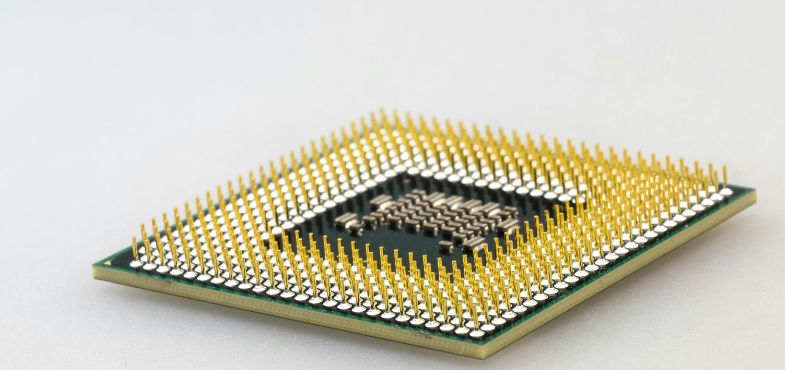
Image Courtesy: Pexels


The chip manufacturing process is undergoing a major transformation as demand for faster, smaller, and more powerful semiconductors continues to rise. From artificial intelligence to high-performance computing and next-generation connectivity, modern applications require chips that push the limits of traditional manufacturing.
To meet these demands, the semiconductor industry is embracing advanced technologies that are reshaping how chips are designed, produced, and optimized.
The Shift to Advanced Lithography
One of the most significant breakthroughs in the chip manufacturing process is the adoption of extreme ultraviolet (EUV) lithography. This technology enables manufacturers to create incredibly small and precise circuit patterns on silicon wafers.
As chip designs move to smaller nodes, traditional lithography methods struggle to maintain accuracy. EUV solves this challenge by allowing finer patterning, which leads to higher performance and improved energy efficiency in modern chips.
Moving from 2D to 3D Architectures
Another major evolution in the chip manufacturing process is the transition from flat, two-dimensional designs to complex three-dimensional structures. Technologies like 3D NAND and advanced packaging allow components to be stacked vertically, similar to multi-story buildings.
This shift increases storage capacity, enhances performance, and reduces the physical footprint of chips. It also enables manufacturers to continue scaling performance even as traditional miniaturization approaches physical limits.
AI-Driven Optimization and Automation
Artificial intelligence is playing a crucial role in modernizing the chip manufacturing process. AI and machine learning algorithms are now used to optimize chip designs, predict defects, and improve production efficiency.
By analyzing massive datasets generated during fabrication, AI can identify patterns and recommend improvements in real time. This leads to higher yields, reduced waste, and faster time-to-market for new semiconductor products.
Digital Twins and Smart Manufacturing
The integration of digital twins is another game-changing development in the chip manufacturing process. These virtual replicas of manufacturing facilities allow engineers to simulate and optimize production workflows before implementing changes in the real world.
Combined with IoT-enabled sensors, smart manufacturing systems provide real-time visibility into every stage of production. This level of insight helps reduce downtime, improve precision, and ensure consistent quality across complex fabrication environments.
The Rise of Advanced Materials
While silicon has long been the foundation of semiconductors, the chip manufacturing process is increasingly incorporating advanced materials such as gallium nitride (GaN) and silicon carbide (SiC).
These materials offer superior performance in high-power and high-frequency applications, making them ideal for technologies like electric vehicles, 5G infrastructure, and renewable energy systems. Their adoption marks a significant shift toward more specialized and efficient semiconductor solutions.
Also Read: Rewriting the Rules of Manufacturing with Next-Gen Semiconductor Equipment
Conclusion
The chip manufacturing process is evolving rapidly, driven by the need for higher performance, efficiency, and scalability. Innovations such as EUV lithography, 3D architectures, AI-driven optimization, and advanced materials are redefining what is possible in semiconductor production.
As these technologies continue to mature, they will play a critical role in powering the next generation of digital innovation—from artificial intelligence to future communication networks.