Future of Television
Next-Generation TV Technology Solutions for Cloud-Native Broadcast Infrastructure Modernization

Image Courtesy: Unsplash


Legacy broadcast stacks were built for predictable schedules, fixed delivery chains, and hardware-bound workflows. Modern media delivery demands something very different: elastic compute, software-defined orchestration, real-time observability, and rapid service deployment across linear, OTT, FAST, and hybrid distribution models. For broadcasters and media platforms, cloud-native architecture has become foundational.
Also read: The Advantages of Smart TVs with Wi-Fi for Streaming and Smart Homes
Why Legacy Broadcast Architecture Creates Operational Friction
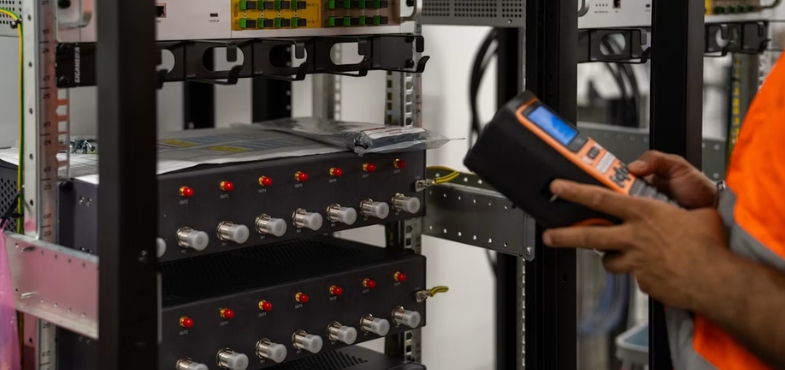
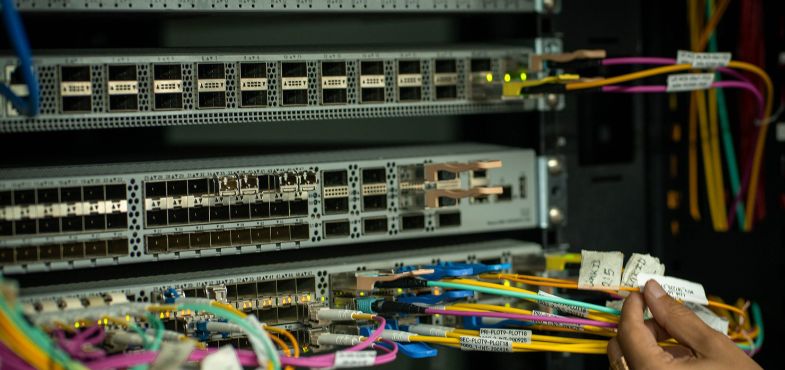
Traditional broadcast environments rely on tightly coupled appliances for encoding, playout, transcoding, ad insertion, and signal management. Scaling requires hardware procurement cycles, rack capacity, integration effort, and extended deployment timelines.
That model creates several bottlenecks:
- Resource underutilization during low-demand periods
- Slow provisioning for live event traffic spikes
- Fragmented monitoring across isolated systems
- High maintenance overhead for proprietary infrastructure
- Limited interoperability across distribution ecosystems
When engineering teams need faster release cycles and flexible service composition, appliance-centric architecture becomes restrictive.
How Cloud-Native Broadcast Infrastructure Changes Media Delivery
Cloud-native broadcast infrastructure replaces monolithic systems with containerized microservices orchestrated through platforms such as Kubernetes. Instead of fixed-function hardware, media workloads become modular software services that scale dynamically.
Key architectural capabilities include:
- Stateless encoding and transcoding workloads
- API-driven playout automation
- Containerized packaging and origin services
- Dynamic ad insertion pipelines
- Autoscaling live stream processing
- Distributed observability and telemetry collection
You gain workload portability across public cloud, private cloud, and edge environments while reducing dependency on single-vendor hardware ecosystems.
Real-Time Video Processing Demands Cloud-Native Engineering Discipline
Broadcast workloads place far stricter performance demands on infrastructure than standard enterprise applications. Live video pipelines require deterministic processing, tight synchronization, and consistent delivery under fluctuating traffic conditions.
Low-latency streaming depends on finely tuned transport protocols such as SRT, WebRTC, CMAF, and LL-HLS. Even minor inefficiencies can trigger buffering, synchronization drift, or playback disruption during live events.
Media processing workloads also require significant compute acceleration. Encoding, transcoding, graphics rendering, and metadata enrichment often rely on GPU-backed orchestration to maintain throughput at scale.
Operational visibility must extend beyond server health metrics. Engineering teams need granular insight into frame loss, bitrate shifts, transcoder failures, buffer behavior, and manifest delivery performance to resolve issues before audiences notice
Security And Resilience Must Be Engineered Into Broadcast Workflows
Media infrastructure faces piracy exposure, credential abuse, API exploitation, and service disruption risks.
Cloud-native security controls should include:
- Zero trust workload authentication
- Secrets management for service credentials
- DRM integration across delivery pipelines
- Runtime container security monitoring
- Infrastructure-as-code policy enforcement
- Multi-region failover orchestration
Resilience depends on automated recovery, traffic rerouting, and fault isolation at the service layer rather than manual hardware intervention.
Where Modernization Delivers Measurable Business Impact
Cloud-native broadcast transformation improves operational precision and financial efficiency.
Expected outcomes include:
- Faster channel launches
- Lower infrastructure waste
- Better elasticity during audience surges
- Shorter release cycles for feature deployment
- Improved disaster recovery readiness
- Greater flexibility for FAST and OTT monetization
Next-generation TV technology solutions built on cloud-native principles give broadcasters the engineering foundation required for scalable, software-defined media delivery.